

Climate change is placing unprecedented pressure on agricultural production systems worldwide. Rising temperatures, water scarcity, irregular rainfall, and extreme weather events are increasingly affecting crop performance and farm profitability.
In this context, climate smart agriculture solutions for modern farming are gaining relevance as practical tools to help farmers adapt to climate stress while maintaining productivity and sustainability. By combining resilience, resource efficiency, and innovation, climate smart agriculture provides a pathway to protect crops against today’s most critical environmental challenges.
What is climate smart agriculture and why crop resilience matters
Climate Smart Agriculture (CSA) is an integrated approach designed to help agricultural systems adapt to climate change while maintaining productivity and reducing environmental impact. Rather than relying on a single practice or input, CSA combines agronomic, biological, and technological solutions to address the increasing complexity of climate-related stresses affecting crops worldwide.
As climate variability intensifies, farmers are facing a growing number of challenges simultaneously: prolonged droughts, irregular rainfall, heat waves, increased solar radiation, and higher pressure from pests and diseases. These stresses directly compromise plant physiology, nutrient uptake, and water use efficiency, ultimately threatening yield stability and crop quality.
In this context, crop resilience has become a central pillar of climate smart agriculture solutions. Resilient crops are better equipped to withstand abiotic stress, recover more efficiently after adverse events, and maintain physiological balance under suboptimal growing conditions. Improving resilience is no longer optional, it is essential to sustain agricultural production in a changing climate.
Climate smart agriculture solutions focus on enhancing this resilience by optimizing the way plants interact with their environment. This includes improving water management, supporting plant metabolism under stress, and protecting crops from extreme climatic conditions, all while ensuring that productivity and sustainability goals remain aligned.
Key climate stresses affecting modern agriculture
Modern agriculture faces multiple climate-related stresses that threaten crop productivity, quality, and long-term sustainability. Understanding these key challenges is essential for designing effective climate smart agriculture solutions that protect yields and strengthen farm resilience.
1. Water scarcity and drought
Rising temperatures and unpredictable rainfall patterns are increasing the frequency and severity of droughts worldwide. Water scarcity directly affects plant growth by limiting nutrient uptake, reducing photosynthesis, and impairing overall crop performance. Addressing water stress is a core component of CSA solutions, ensuring crops maintain productivity even under limited water availability.
2. Extreme heat and solar radiation
High daytime temperatures, combined with intense solar radiation, can damage plant tissues, reduce photosynthetic efficiency, and trigger the production of reactive oxygen species. Over time, these stresses negatively affect both yield and crop quality. Climate smart agriculture solutions aim to protect plants from heat and light stress while supporting their natural coping mechanisms.
3. Unpredictable rainfall and flooding
Erratic rainfall and localized flooding can lead to soil erosion, nutrient leaching, and root damage. Crops exposed to sudden excess water may experience stunted growth and increased susceptibility to diseases. Adaptive agricultural practices, combined with stress-mitigating inputs, form a key part of effective climate smart agriculture solutions.
4. Intensifying pests and diseases
Climate change alters pest and pathogen dynamics, often increasing pressure on crops. Higher temperatures and humidity can accelerate the life cycles of pests and spread of diseases, amplifying production risks. Integrated CSA solutions help strengthen plant resilience, reducing vulnerability to these biological stresses.
By tackling these interrelated stresses, climate smart agriculture solutions provide farmers with a comprehensive strategy to maintain crop performance, protect yield, and ensure long-term sustainability. This holistic approach sets the stage for targeted interventions using advanced tools and biostimulants designed to enhance crop resilience in real-world conditions.
An integrated climate smart agriculture solution for crop resilience
Addressing climate-related stresses in agriculture requires more than isolated interventions. Effective climate smart agriculture solutions rely on integrated strategies that support plant physiology, optimize resource use, and protect crops under increasingly challenging environmental conditions.
Rather than focusing on a single stress factor, an integrated approach combines complementary tools that work at different levels of plant response. This allows crops to better manage water scarcity, recover from hydric stress, and maintain physiological balance when exposed to extreme temperatures and solar radiation.
Within this framework, biostimulants and stress-mitigating inputs play a central role. By enhancing plants’ natural defense and adaptation mechanisms, they help build resilience without compromising productivity or sustainability. Integrated climate smart agriculture solutions are therefore designed to support crops before, during, and after stress events, ensuring consistent performance across diverse growing conditions.
This holistic strategy is particularly relevant in regions where climate variability is high and multiple stresses occur simultaneously. Combining solutions that target water management, stress recovery, and radiation protection enables farmers to respond more effectively to climate challenges while maintaining yield stability and crop quality.
Climate smart agriculture solutions in practice: the Climate Rescue Pack
Translating CSA from theory into real-world results requires practical, field-tested solutions that address the most critical climate-related stresses affecting crops. In response to this need, Futureco Bioscience has developed an integrated climate smart agriculture solution designed to support crop resilience under increasingly challenging environmental conditions: the Climate Rescue Pack.
This integrated solution brings together complementary tools that act on key physiological processes, helping crops cope with water scarcity, recover from hydric stress, and maintain productivity when exposed to extreme solar radiation. By combining targeted biostimulants and stress-protection technologies, the Climate Rescue Pack provides farmers with a practical and adaptable response to climate variability.
Hydromaat: supporting water management under climate stress

Water scarcity and irregular rainfall are among the most limiting factors for crop productivity. Hydromaat, an integral component of Futureco Bioscience Climate Rescue Pack, harnesses the power of microbial biostimulants. Utilizing a proprietary strain of Ensifer meliloti, Hydromaat helps farmers to:
- manage reduced irrigation water availability and unpredictable o scarce rainfall patterns
- maintain plant health and crop productivity
- prevent hydric stress
This innovative solution provides a lifeline to farmers grappling with droughts and water shortages, maximizing crop performance even in water-scarce conditions.
Fitomaat: improving crop recovery from hydric stress
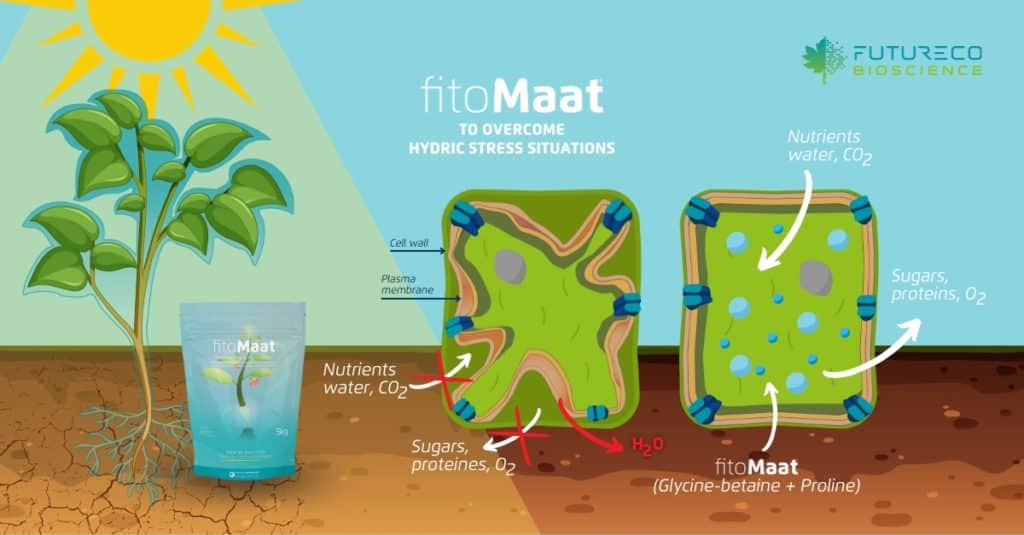
Periods of hydric stress can severely compromise yield and quality if plants are unable to recover efficiently. Fitomaat is a biostimulant formulated with a high percentage of glycine-betaine (80%) and proline (10%), designed to support crops during and after stress events, helping preserve yield potential and maintain crop quality.
By bolstering plants’ natural coping mechanisms, Fitomaat acts as a formidable aid in combatting hydric stress, empowering farmers to overcome the adversities posed by drought conditions.
UltraV: protecting crops from excessive solar radiation
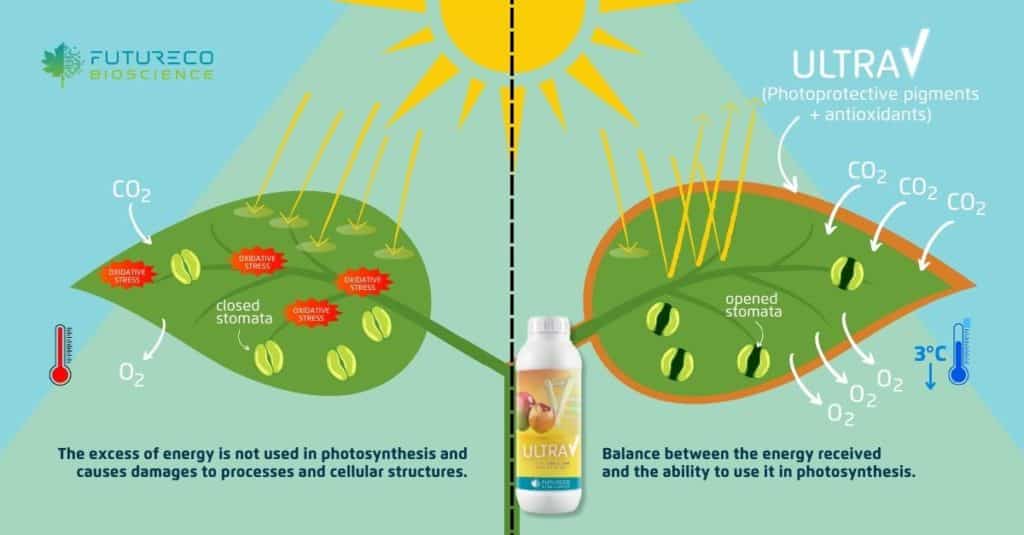
High temperatures and intense solar radiation can disrupt photosynthesis and damage plant tissues. UltraV acts as a sun protectant and biostimulant, helping crops regulate surface temperature, maintain stomatal activity, and sustain photosynthetic efficiency. This protection is essential to prevent stress-related yield losses during periods of extreme heat and radiation.
Together, these three components form a comprehensive climate smart agriculture solution that addresses the most pressing challenges faced by modern farming systems. By integrating water management, stress recovery, and radiation protection, the Climate Rescue Pack enables farmers to safeguard crop performance, improve resilience, and move toward more sustainable agricultural production in the face of climate change.
Advancing climate smart agriculture solutions for a resilient future
Climate change is reshaping agriculture at an unprecedented pace, placing increasing pressure on crop productivity, resource efficiency, and long-term sustainability. In this context, climate smart agriculture solutions have become essential tools to help farmers adapt to environmental stress while maintaining yield stability and crop quality.
By focusing on crop resilience, water management, and stress mitigation, integrated approaches allow agriculture to move beyond reactive strategies and toward proactive, science-based solutions. Supporting plants before, during, and after stress events is key to reducing production risks and ensuring consistent performance under variable climate conditions.
Futureco Bioscience’s Climate Rescue Pack exemplifies how innovation in biostimulants and stress-protection technologies can translate CSA into practical, field-ready solutions. By combining complementary tools that address water scarcity, hydric stress, and excessive solar radiation, this integrated solutions empowers farmers to protect crops, optimize resources, and build more resilient production systems.