
Water stress in plants is one of the most critical challenges affecting global agriculture. When crops face drought, salinity, or extreme temperatures, the inability to maintain proper water balance disrupts key physiological processes and threatens yield quality. High-value crops such as berries, citrus, vegetables, avocado, and fruit trees, are particularly vulnerable, as even short periods of stress can reduce photosynthesis, limit growth, and compromise fruit development. Understanding the causes, symptoms, and mitigation strategies of water stress in plants is essential for maintaining productivity in an increasingly unpredictable climate.
What Is Water Stress in Plants and Why Does It Occur?
Water stress in plants occurs when water demand exceeds its ability to absorb water from the soil. This imbalance may be triggered by several environmental and agronomic factors:
1. Drought or irregular rainfall
Periods of low precipitation reduce soil moisture, making it difficult for roots to extract enough water to maintain cellular turgor.
2. High temperatures
Excessive heat increases evapotranspiration rates, accelerating water loss from leaves and raising the plant’s metabolic demand.
3. Soil salinity
Salts reduce the osmotic potential of soil water, forcing plants to expend more energy to absorb it, sometimes making it inaccessible despite sufficient moisture.
4. Poor soil structure
Compacted or poorly aerated soils restrict root development and reduce the plant’s ability to reach deeper water reserves.
5. Imbalance between root and shoot growth
Overly vigorous canopies may transpire more water than the root system can supply, increasing vulnerability during heat or drought events.
How Water Stress in Plants Affects Physiology
When plants face water stress, water availability decreases and osmotic potential rapidly becomes unbalanced. This triggers a cascade of physiological disruptions that can quickly escalate into metabolic disruption:
- Loss of cell turgor and reduced growth
- Impaired photosynthesis due to chloroplast dehydration
- Protein denaturation and membrane destabilization
- Accumulation of reactive oxygen species (ROS)
- Reduced carbon fixation and increased photorespiration
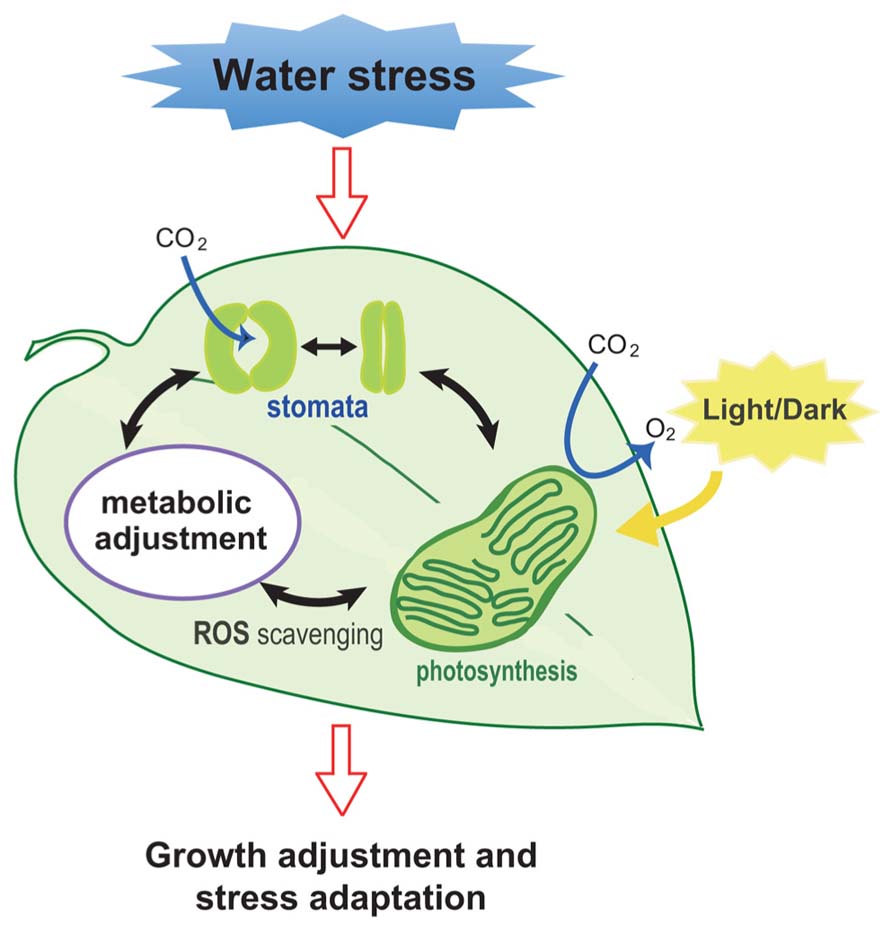
Copyright: Response of plants to water stress. By Yuriko Osakab Keishi Osakabe Kazuo Shinozaki Lam-Son P. Tran. Frontiers in Plant Science
Underlying Intracellular Damage
These physiological disruptions originate from severe intracellular damage caused by osmotic imbalance and the accumulation of reactive oxygen species (ROS). Drought-stressed cells experience DNA damage, mitochondrial membrane disruption, phospholipid degradation, enzyme inactivation, and compromised cell wall and membrane integrity. Together, these cellular-level injuries lead to the visible decline in growth, photosynthesis and overall plant performance.
Over time, these combined effects can lead to significant yield losses and reduced postharvest quality.
Visible Symptoms of Water Stress in the Field
Identifying water stress in plants early is key to preventing irreversible damage. Common visual symptoms include:
- Wilting and leaf rolling
- Leaf tip burn or marginal necrosis
- Pale or chlorotic foliage
- Reduced shoot growth or shortened internodes
- Flower or fruit abortion
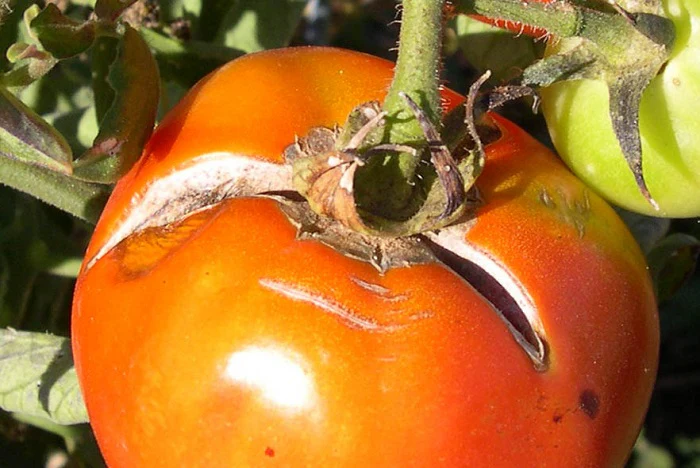
- Fruit cracking in sensitive crops
- Premature leaf drop
Because many symptoms overlap with nutrient deficiency or disease, growers must evaluate stress indicators holistically, ideally with soil moisture probes or canopy temperature sensors.
Water Stress in High-Value Agricultural Crops
Water stress affects each crop differently, but some common patterns are observed:
Berry crops: Sensitive to sudden changes in water availability, leading to soft fruit, cracking, or aborted flowers.
Citrus: Exhibits leaf curling, reduced fruit size, and lower juice quality.
Avocado: Extremely vulnerable to drought; water stress disrupts flowering, reduces fruit set, and triggers premature fruit drop.
Vegetables: Tomatoes, peppers, and cucumbers rapidly lose yield potential under even moderate stress due to high water demand and shallow root systems.
These vulnerabilities highlight the need for integrated management strategies.
Strategies to Mitigate Water Stress in Plants
A comprehensive approach to preventing water stress in plants includes both agronomic practices and physiological support tools.
1. Efficient irrigation management
Using drip irrigation, deficit irrigation strategies (RDI), or sensor-based scheduling improves water use efficiency and prevents unnecessary stress.
2. Soil improvement and organic matter
Adding compost, mulches, or cover crops enhances water retention, improves root penetration, and stabilizes soil temperature.
3. Variety selection and rootstock choice
Some cultivars exhibit greater tolerance to drought or salinity; selecting the right genetics is a long-term mitigation strategy.
4. Canopy and crop load management
Balanced pruning reduces transpiration and ensures the root system can support foliage and fruit development.
5. Use of biostimulants and osmoprotectants
Certain biostimulants help maintain plant metabolism during periods of limited water availability. Osmoprotective molecules such as glycine betaine and proline stabilize membranes, support photosynthetic activity, and improve resilience under stress.
Fitomaat: Advanced Support for Water Stress Management
Among osmoprotective solutions, Fitomaat WG stands out as a valuable tool for managing water stress in plants, thanks to its high concentration of glycine betaine and proline. Fitomaat strengthens the plant’s osmotic balance, safeguards chloroplast function, and mitigates oxidative damage caused by ROS.
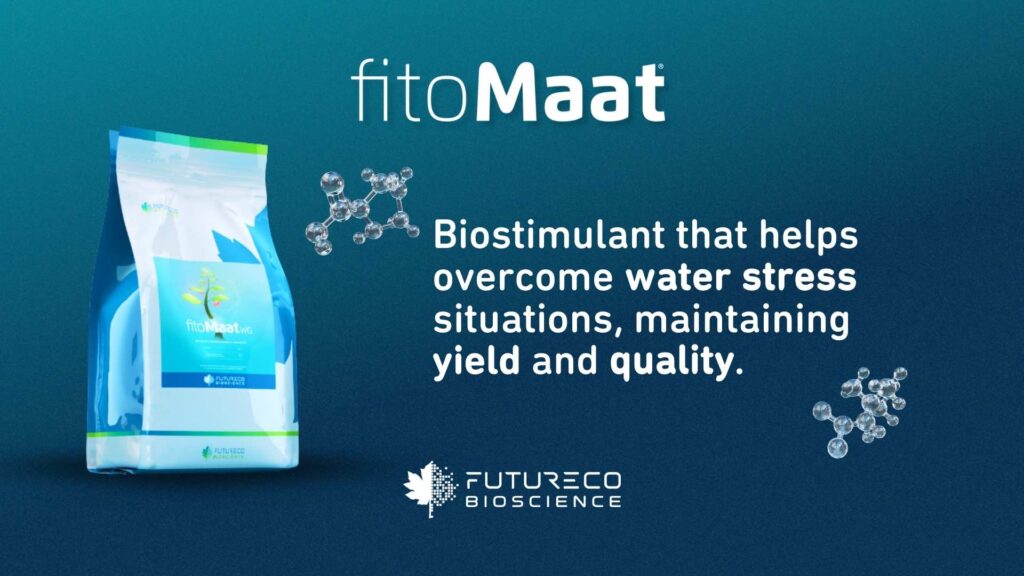
Fitomaat helps crops maintain growth and productivity even under adverse environmental conditions. Its formulation, derived from natural sources and approved for organic agriculture, makes it a safe and sustainable choice for growers seeking to improve crop resilience.
In a world where water scarcity and climate uncertainty are increasing, Fitomaat offers an advanced biotechnological tool to support the physiological performance of plants when water stress becomes unavoidable.