
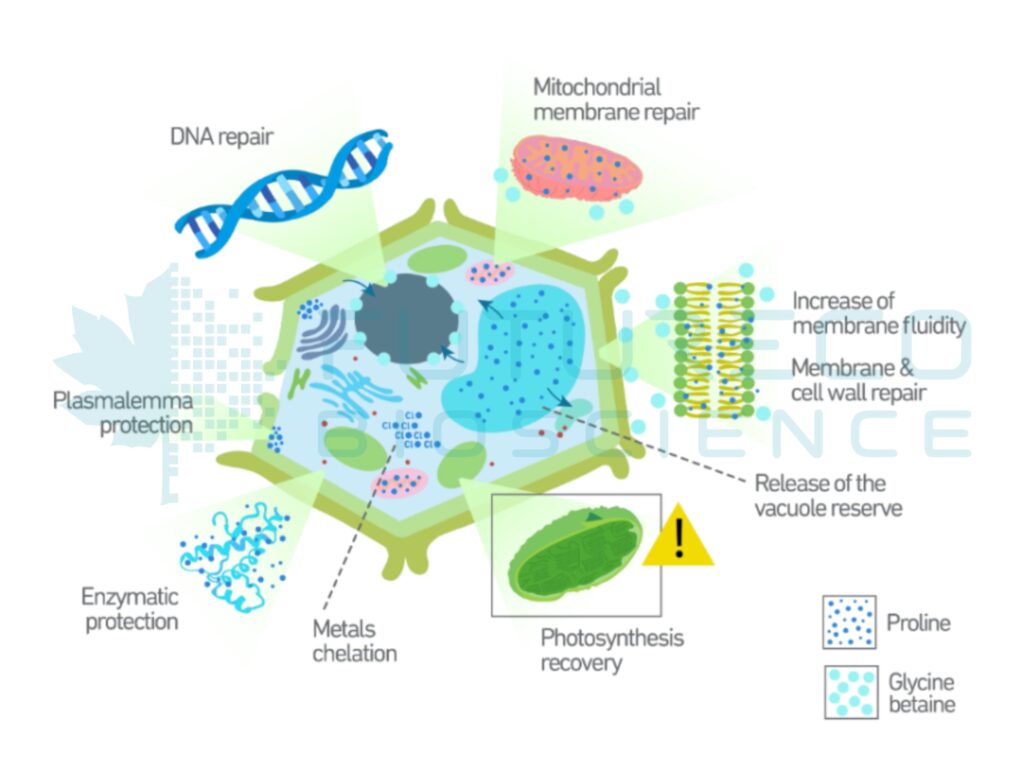
Water stress is one of the most limiting environmental factors for agricultural productivity, and solutions based on glycine betaine are becoming increasingly important for maintaining crop performance under drought, salinity, and high/low temperatures. These environmental pressures disrupt cellular homeostasis, reduce photosynthetic activity, and compromise yield and fruit quality. In high-value crops, where uniformity, size, and postharvest behavior directly determine profitability, strengthening the plant’s natural osmotic protection mechanisms is essential.
Among the different strategies that plants naturally use to cope with dehydration, the accumulation of organic osmolytes plays a central role. Two of the most effective osmoprotective molecules are glycine betaine and proline, which help plants maintain metabolic activity even under severe stress conditions. These compounds not only protect the structural integrity of cells but also preserve the photosynthetic machinery, reduce oxidative damage, and support rapid recovery by alleviating stress.
In this article, we explore how glycine betaine and proline function and interact at the physiological and biochemical levels to safeguard plant performance under water stress and why their targeted application is becoming a key tool in modern agriculture.
What Happens to Plants Under Water Stress?
When plants face water stress, water availability decreases and osmotic potential rapidly becomes unbalanced. This triggers a cascade of physiological disruptions:
- Loss of cell turgor and reduced growth
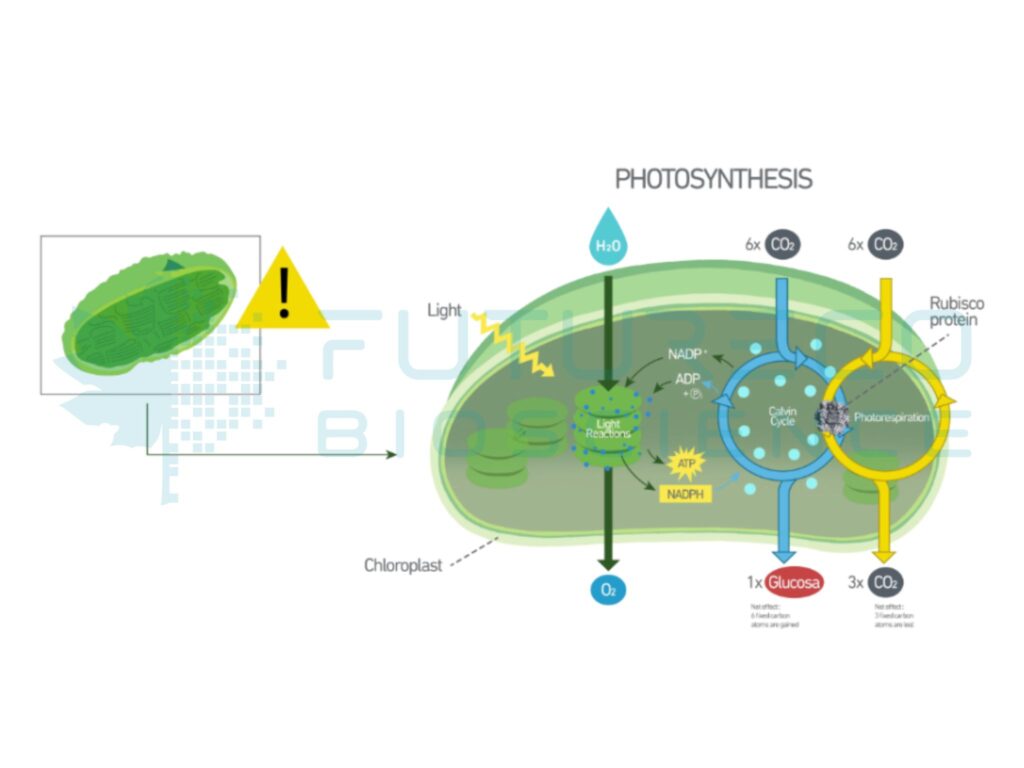
- Impaired photosynthesis due to chloroplast dehydration
- Protein denaturation and membrane destabilization
- Accumulation of reactive oxygen species (ROS)
- Reduced carbon fixation and increased photorespiration
Underlying Intracellular Damage
These physiological disruptions originate from severe intracellular damage caused by osmotic imbalance and the accumulation of reactive oxygen species (ROS). As shown in the diagram below, drought-stressed cells experience DNA damage, mitochondrial membrane disruption, phospholipid degradation, enzyme inactivation, and compromised cell wall and membrane integrity. Together, these cellular-level injuries lead to the visible decline in growth, photosynthesis and overall plant performance.
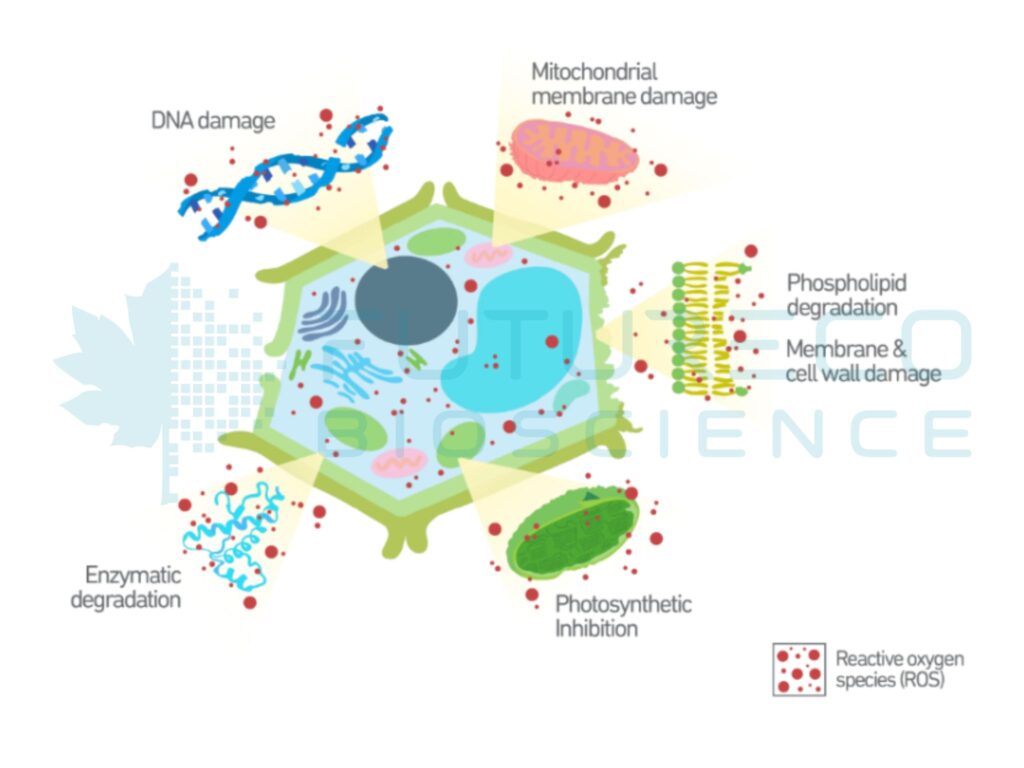
If the stress persists, irreversible damage occurs, leading to lower yields and poorer quality. This is why osmoprotective mechanisms are vital to plant resilience.
Glycine Betaine: A Key Osmoprotectant
Glycine betaine is one of the most powerful osmoprotectants synthesized by plants under dehydration and salinity. Its role is primarily protective and structural:
1. Stabilization of Cellular Membranes
Osmotic stress, produced by cold and drought, reduce membrane fluidity (stiffness and rupture of membrane lipids), while heat increases it (loss of intracellular electrolytes). Glycine betaine inserts itself into the membrane environment, preserving fluidity and preventing ion imbalance.
2. Protection of Proteins and Enzymes
Many of the enzymes critical for photosynthesis and respiration lose structural integrity under dehydration. Glycine betaine maintains their proper folding, especially:
- Rubisco, responsible for CO₂ fixation
- D1 protein in Photosystem II, extremely sensitive to heat and osmotic stress
Proline: Osmoregulation and Antioxidant Defense
While glycine betaine stabilizes structures, proline complements this function with strong osmoregulatory and antioxidative actions.
1. Maintenance of Cellular Water Balance
Proline accumulates rapidly in the cytosol, lowering osmotic potential and allowing cells to retain water even in extremely dry environments.
2. Scavenging of Reactive Oxygen Species
Water stress increases the production of ROS, which can oxidize lipids, proteins, and DNA. Proline acts as a natural antioxidant, neutralizing ROS and enhancing the activity of detoxifying enzymes.
A Synergistic Mode of Action: Why Glycine Betaine and Proline Work Better Together
The most strategic interaction between glycine betaine and proline occurs in the chloroplast, one of the organelles most sensitive to dehydration and, at the same time, the heart of photosynthesis and the plant’s energy engine.
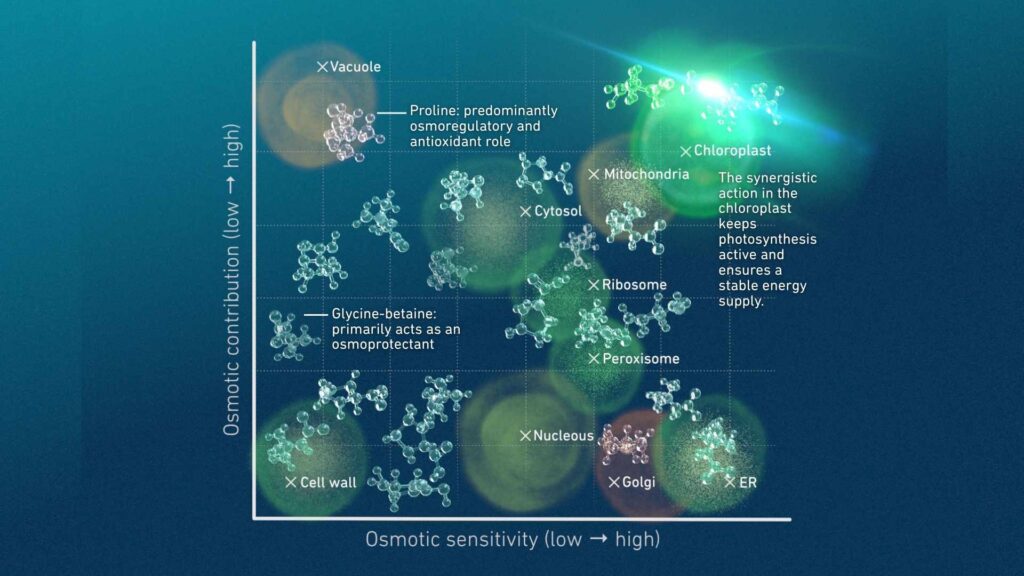
In the chloroplast, while glycine betaine ensures efficient carbon fixation, proline ensures energy supply and stabilizes the redox balance, maintaining active photosynthesis and preventing drift toward photorespiration.
- Glycine betaine protects the thylakoid membranes, Rubisco, and PSII.
- Proline maintains redox balance, ensures ATP/NADPH availability, and reduces oxidative stress.
Together, they ensure that the photosynthetic machinery remains active, enabling plants to maintain sugar production and energy supply even when external conditions become unfavorable.
Fitomaat: Advanced Osmoprotection for High-Value Crops
Although plants have the metabolic capacity to synthesize osmoprotectants such as glycine betaine and proline, their natural production is highly variable across species. Many crops accumulate little to no glycine betaine—even some major ones like tomato, potato, rice, and tobacco. Moreover, endogenous synthesis typically begins only once the plant is already experiencing stress, which limits the speed and magnitude of the response.
For this reason, exogenous applications provide an immediate and energetically efficient source of protection, improving tolerance and accelerating recovery. Fitomaat provides a highly concentrated and bioavailable source of both molecules, designed specifically for rapid protection and sustained recovery under water stress.
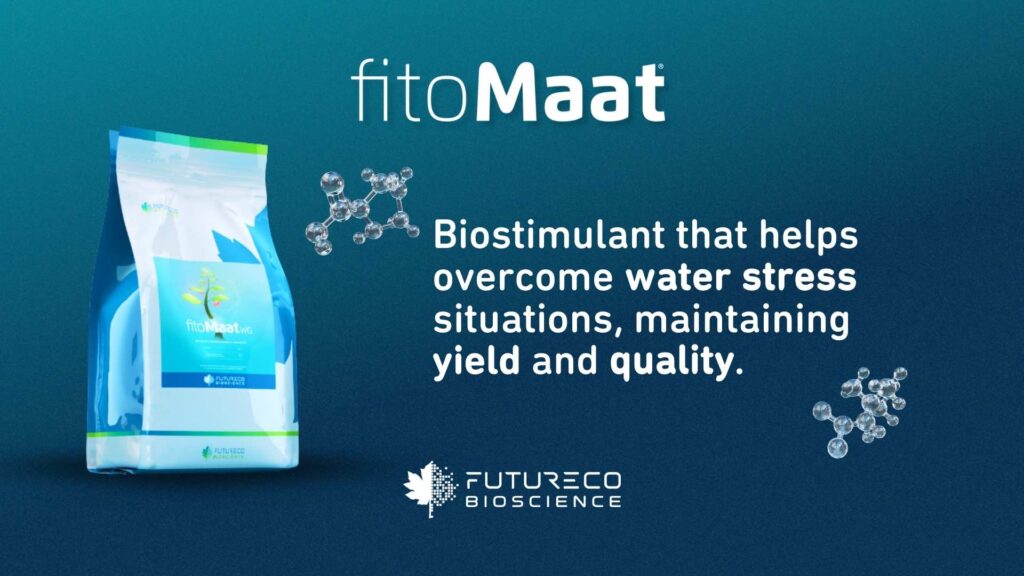
Fitomaat composition:
- Glycine betaine 80%
- Proline 10%
- Antioxidants 0.5%
(Amino acids obtained by bacterial fermentation of plant proteins)
What makes Fitomaat unique is its ability to actively transport osmoprotectants to sensitive organs (young leaves, roots, and fruits) where they accumulate and provide long-lasting protection. Its synergistic blend helps preserve photosynthesis, maintain membrane integrity, sustain metabolic activity, and prevent disorders such as cracking and early fruit drop.
Fitomaat is also suitable for organic agriculture, as its components come from natural sources such as sugar beet and plant proteins. Safe, residue-free, and environmentally friendly, it represents a cutting-edge biotechnological solution for maintaining crop performance when the environment stops collaborating.
Whether crops are facing drought, salinity, or extreme temperatures, Fitomaat provides the physiological support plants need to stay productive and resilient.